
All This Is My Cradle: An Interview With Danielle Janess

“Caddis,” our Silent Spring finalist, focuses on the caddisfly and then zooms out to examine a legacy of pollution and its impact on the natural world. It is a breathtaking poem, and we thoroughly enjoyed chatting with poet Danielle Janess about the background of this piece. Enjoy our conversation.

Rebecca Paredes: You submitted “Caddis” for our Silent Spring challenge, which asked writers to dig into themes of climate change and the world changing under our feet. How did that prompt inform this piece?

Danielle Janess: The impulse to write “Caddis” comes from my life and family. I grew up on lower Lake Huron, where I have vivid memories of caddisflies and mayflies, at a certain time of year, seeming to cover every exterior surface: screen doors, walls, windshields. They remind me of the feeling of peak spring and the turn into summer. For my father, who taught me to pay attention to the natural world, their hatch meant the start of trout fishing season. Caddisflies belong to the scientific order Trichoptera. They undergo four distinct metamorphoses, transforming at first in water (from egg to larva to pupa) before emerging into air as a winged, moth-like adult. A keystone species of the Great Lakes, they support cultural, recreational, and commercial fisheries. Because they spend most of their lives underwater, they are also highly sensitive to water pollution. I think almost constantly about Lake Huron and the St. Clair River—they are my lifeblood. The poem reckons with our human impact on the Great Lakes by looking at this one small but important insect. 

RP: This poem uses anadiplosis, a literary device where the last word of one line appears at the beginning of the next. To be honest, we geeked out about this in the Glossy Planet Slack channel—we loved how this device ties together the “weaving” mentioned in the epigraph and by the caddisfly, and how much that repetition transforms the poem when read aloud. All of that to say: can you talk about your decision to use this device?

DJ: If you watch a video of a caddisfly larva building its protective case, prepare to be amazed. While the grub itself is not the most attractive creature, they are wondrous little architects. The French artist Hubert Duprat famously “collaborated” with caddis larvae in the 1980s. He put them in aquariums alongside precious gemstones like pearls, rubies, lapis lazuli, and genuine gold flakes. The larvae then spun bejeweled sheaths from the gemstones, each one completely original. While not all Trichoptera build cases, those that do use materials that vary depending on their species and what’s available in the local water column. That could be minerals like sand or fine gravel, debris such as leaf bits and twigs, animal matter like snail shells and fish scales, or, as we now know, micro and nanoplastics.

In my youth I saw loads of caddisflies, but until recently I didn’t know about their intricate lives as aquatic artists. The more I learn about them, the more my appreciation deepens. I wanted to honor their way of being and making, so I played with different ways for the poem to approach the insect’s mode of assemblage. No one quite knows how they got their common name, “caddis.” But Merriam-Webster cites it as an old English noun, c.1500, for worsted yarn, ribbon, or binding, whereas Trichoptera comes from the Greek, meaning “hair-winged.” I got to thinking about hair, braids, weaves, and binding (the verb), which they do with the sticky silk from their mouths. One day, in a craft class led by Yvonne Blomer, it clicked. She mentioned a form in which the end of one line begins the next, which made me picture a weaving shuttle, and my mind flashed on the caddisfly. I also hope that the sense of motion afforded by the pattern conveys something of the forward-moving current in the St. Clair River. 

RP: “Caddis” both points out how we are interconnected and how our actions impact the broader ecosystem. In particular, I loved the shift into microplastics and how the poem highlights not only how omnipresent they are, but also how they become woven into the very bodies of humans and animals alike. Do these themes reappear in your other work, and if so, what draws you to them?

DJ: Your question hits on something I wrestle with both personally and in my current poetry project. 

What does it mean that I have inherited from the life-sustaining enormity of the Great Lakes and also from the violent appropriations of mega-polluters like Shell, Nova Chemicals, and Enbridge? 

In Learning to Die: Wisdom in the Age of Climate Crisis, the poet Jan Zwicky says that “love, awareness, and the desire to respond are distinguishable but inseparable.” Like it or not, because of my life and family, I am connected to the crimes of polluting corporations. For seventeen years, my father worked as a process operator at the Sarnia Shell refinery, among the world’s largest manufacturers of gasoline, distillates, liquid petroleum gas, heavy oils, pure chemicals, and solvents. I am keenly aware that his labor, along with my mother’s, provided for my upbringing and for our family’s home on the lake. He died in 2020 of multiple aggressive cancers. Studies show that men in our region experience cancer rates at thirty percent higher than the Canadian average.

In 2024, just outside my hometown of Sarnia-Lambton-Bkejwanong, Nova Chemicals opened a plastics production site that produces one billion pounds of brand-new plastic annually, in the form of polyethylene pellets, aka “nurdles.” Billions of these lentil-sized nurdles now litter creeks and stormwater routes that drain directly into the St. Clair River and Lake Huron, leaching yet more toxins into our environment, drinking water, and food chain. As for Enbridge, their badly aging Line 5 pipeline moves as much as 540,000 barrels of crude oil per day from Superior, Wisconsin, to the Sarnia refinery, snaking under the Straits of Mackinac and crossing under the St. Clair River through the heart of vital Great Lakes ecosystems. Over a fifty-year period, from 1967-2017, Enbridge’s Line 5 spilled over one-million gallons of oil. The Aamjiwnaang First Nation of Sarnia has opposed this pipeline since 1953 because it trespasses through their legal treaty territory.

While Line 5 predates my birth, I am old enough to remember our local beaches before they were strewn with polyethylene nurdles. I remember swimming in the lake before the invasive zebra and quagga mussels, brought into the Great Lakes by freighters from the Caspian Sea, filtered the water to its current clear blue by sucking up the phytoplankton and subsequently driving our native whitefish and trout populations to the brink of collapse. All this is my cradle, and it will be my grave.

RP: Is there anything else you’d like to share about this piece, or anything you’re working on now?

DJ: I’d like to share a few of the many living writers whose work contributes to this conversation. These include Rita Wong, whose poetry overlaps with water activism; Philip Kevin Paul, W̱SÁNEĆ Nation poet, whose work astonishes for its relationship to his home on Vancouver Island; Laurie D. Graham, whose poetry often investigates familial history and whose latest collection, Calling It Back To Me, I can’t wait to read; and Tim Lilburn, whose radically contemplative, linguistically-charged work, in essay collections like Living In The World As If It Were Home and poetry collections like The Names, invites the reader into wholly new heights of thinking.

Lastly, please let me say thank you again, Rebecca, and to all of you at Glossy Planet, for this meaningful recognition.
Caddis

n. a worm; a weave

Green, olive, pale butter, cream, the soft-bodied grub in its portable case
Cases are tubular, collaged of debris, fastened by silk spun from the larval mouth
Mouth of the Great Lake blowing the last ice flats downriver
Rivers, riffles, lakes, streams, seeps, ponds, creeks—the architect builds its room in fresh waters
Water in December, cold and clean, a glittering guest at the front door
Door through which the head emerges: bristled, biting mouthparts, light & motion-sensing eyes
Eye of the rainbow sees panoramic caddis-snow—casemaker, collector, scraper, swimmer—adrift
Drifting through the midlayer on silken parachutes, out of Gondwana, across time
Time of peak drift, the sliver before dusk
Timespan of case construction, a day
Timeline of transfiguration, a year
Lifetime of fly, an anorectic moon
Moontime, the architect collects, in its grapple-hooked prolegs: sand, shell, stone, twig, bark, leaf,
____ cellulose-based rayon, polyester, acrylonitrile-butadiene-styrene, polyacrylamide, vinyl ester
____ resin, polyvinyl chloride, thermoplastic polyurethane, polypropylene, polyethylene
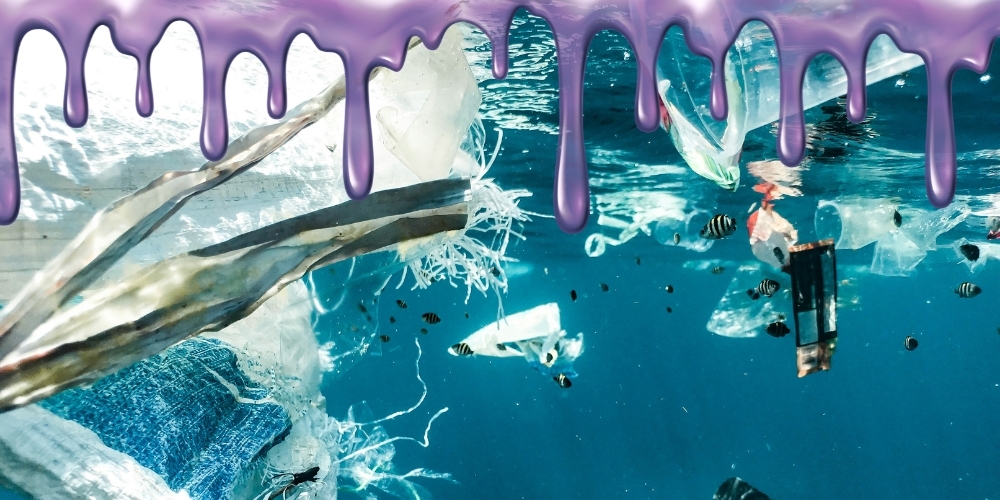
Polyethylene plastic nurdles, one billion pounds a year, manufactured by Nova Chemical
Nova Chemical says their plastics make everyday life healthier for people on the St. Clair River
Rivers are prime sinks for marine microplastics
Microplastics wander my blood, my brain, my heart, my lungs, my liver, my kidneys
Microplastics colour my breastmilk, my eyes, my throat, my ovaries, my saliva, my urine
Microplastics are in the zooplankton, zebra mussels, moths, mosquitoes, mayflies, in gobies, perch,
____ pickerel, in bass, bloater, bluegill, in pumpkinseed, catfish, whitefish, in
In the developing world, says Nova Chemical, the thirst for plastics is off the charts
Charting Lake Huron by distribution, type, and abundance of plastic debris per beach
Beaches at Sarnia yield ninety-four percent of total polyethylene nurdles across all sites sampled
Samples over a decade show plastics in nine-tenths of all Great Lakes drinking water
Great Lakes drinking water should be clean and cold
Cold December moon, Manidoo-giziisoons, Little Spirit Moon, the soft-bodied grub in its
____ microplastic case
Cases are swallowed whole, with their soft-bodied spirits, by glittering trout with panoramic eyes
I am pretty pleased, says the mayor, industry is the real hero here
Here in Sarnia, come springtime, caddisfly lift from the river like mist at dawn

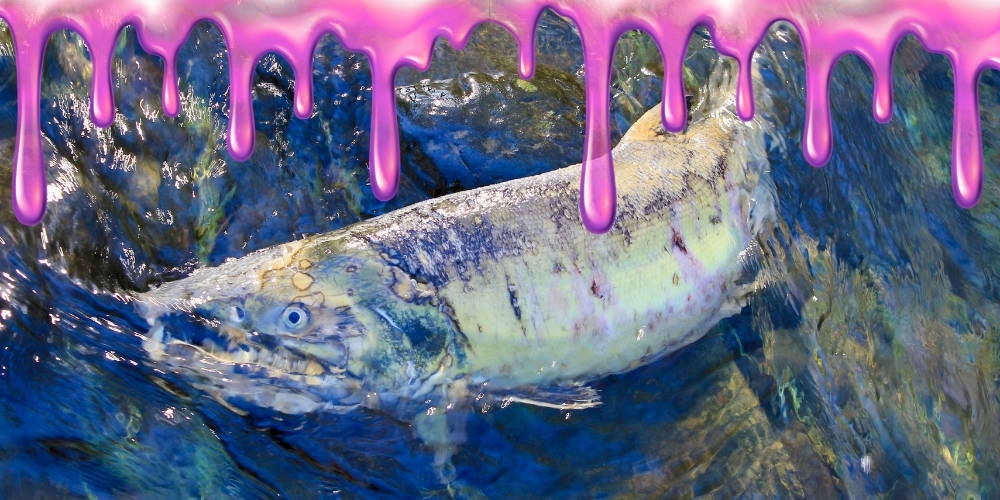
Shine Early, Spring Salmon

My father and I pulled weeds today—
mouse-ear chickweed. Highly invasive.
European, of course.

In the forest, on walks, we target
cheat grass. Another invasive import.

This all started recently, this fixation
on invasive plants. It all started because
my mom wants native wildflowers
in the front of their house.

I’m trying to make this into
a metaphor, but it’s so literal:
the invaders are at the gate.

We walk through the forest
and I try to read it like a book.
I imagine I have the eyes of my Karuk ancestors,
eyes that could tell friend from foe
on the forest floor
with a glance.

What sicknesses would they notice
in the patterns of the moss?

Thousands of generations
spent
learning
________tending
___________befriending
our quiet kin.

Two generations
_____________to forget.

It is June, and I am sad
that pakachakaachas—
the Stellar’s Jays—
are gone. Tâat,
Kach’Aka, Píshiip and Axak left
two days ago from their drain pipe
nest, and my heart is filling their
void
______with
___________flowers.

At one time, Karuk speakers had accents thick enough that
they could tell where folks grew up by their
diphthongs and twangs. This fact makes me more
sad than many others that also make me
sad.

___________________________________We will never know the sum of what we’ve lost.

But the dams, at last, are broken.
The salmon swim again.
One hundred years,
One hundred
___________generations
Yet still they remember the way.

Karuk stories end
with this phrase
“Shine early, Spring Salmon, hurry upriver.
My back is straight.”

April is called iruravahívkuusra.
Spring Salmon month.

_______________________________________________The invaders are at the gates.

One hundred years ago
the Klamath dams were built
to be permanent.
But it was not the dams that
stood the test of time.

How long can this year go on?
I ask the salmon,
looking at the
destruction
____________invasion
_______________________conflagration
around the planet.

One year, she replies mildly.
Then it’s done.

Countdown

10… 

“When you look down at Earth, what do you think you’ll see?” 

Planetary departure is inevitable. There’s nothing left here for her to do. Mandatory isolation is T-minus three days. The dishes reside as permanent tenants in the stainless steel sink—water rations. Seeds from last year’s harvest, pocketed away in small business card-sized envelopes. 

Some for Harry to take, and the rest to stay with me, tucked away in a waterproof bag.

“Layers and layers of blue, and you. I think I’ll always be able to see you.” 

Her fingers dance alongside the back of my hand, past the scar from the time I tried to remove the pit from an avocado. A long-ago fruit. A long-ago scar. 

She’ll still be here, but not really.

9…

“Do you have to go up there?”

Stevie Nicks sings about time casting a spell on both of us from a spinning vinyl in the den. Harry cocoons herself against my back, wrapping her thin arms around my hollow stomach and up between my breasts. It’s too hot to lie like this, but we do it anyway. 

“The Ruby-crowned Kinglet and the Nashville Warbler—”

“Gone?” 

Harry nods her forehead into the nape of my neck, loosening my thinning braid. I want to tell her we can do more, convince the neighbors to turn their lights off at night, compost, but I know better. 

She says, “Without the birds…” 

Between her and me, it’s the things left unspoken that make me understand her the most. I hope Stevie is right and that she won’t forget me. 

Without the birds, the crickets won’t chirp.

The petrichor will be but a faint memory.

8…

“It’s about the tilt, then?”

Harry mouths delicate words—morrowlight, aurorae, lustrate—into my chest. Natural oil ran out long ago, but it doesn’t stop her from drilling straight through the core of my heart. 

“During Spring Equinox, the sun crosses the celestial equator, and the Earth’s axis doesn’t tilt away or toward the sun.”

The reflection of my eyes in hers is a tiny dwarf planet, expansive and deep. I’m reclassified like Pluto, no longer clearing her orbit.

Glow-in-the-dark stars constellate the ceiling of our bedroom into heart-shaped glaciers and ice. 

A forgotten planet is on everyone’s lips.

7…

“Would it be so different? ”

Harry paces the rug at the foot of our bed like an invisible spacehook is tugging her back. I spent last night buzzing her wavy shoulder-length hair down with a number two guard. 

“Gene expression changes in space, but they’re changing here, now. You can see that, can’t you?” 

I think about the phantom tether between me and my mother and my grandmother, how our lives begin and end in a hypoxic state. With Harry, the air continues to evaporate.

With the window open, nothing moves through. 

6…

“Do you remember our first date?”

There’s a Polaroid of us on the fridge. 

I stand at the portable camp stove, poking at what should be Harry’s favorite meal—Pho. But it’s mainly broth for her to eat one last time. Protein pills sound like such a drag.

“You named all the planets from biggest to smallest in less than ten seconds.”

I’d never met a real astronaut before. 

“JupiterSaturnUranusNeptuneEarthVenusMarsandMercury.” 

The planet’s names whistle through the gap in my teeth. A party trick, maybe, but two pieces of metal in space will collide eventually, only to fuse with the other.

Pale, yellow garlic scapes lay on the cutting board. Overflowered. 

But the bees don’t come.

5…

“Did you ever love me?”

Harry stops packing her 3.3 lbs of personal items. Everything that matters is right here in this house, on this land, even if it’s not thriving, too big for a bag. 

“I won’t spend our last days together proving what you already know to be true.”

She steps into my space and pulls the shirt off my body. A threadbare old cotton thing from a Pride run we did together at the beginning of our relationship. She rolls it with precision, tucking it into a sealed Ziploc bag, next to her other personal preference items.

I think of all the flowers I’ll never get to smell again if she doesn’t go now.

April hasn’t been the same since the lilacs stopped blooming. 

4…

“How much time do we have left?”

This existence is intolerable. I used to count the days, weeks, and months we’d been together until the years were a blurred mess of always.

“An eternity if we’re lucky. The rest of our lives if we’re smart.”

But we’ve done all the smart things, reduced our carbon footprint. Washed on cold. Went vegan. Showered together. 

What a waste.

A day on Earth is almost a year on Venus. Twin sisters. Fraternal but not identical. 

3…

“And if you don’t come back?”

Warm droplets pelt our skin, and what a relief to know, March’s rain wasn’t the last we’d ever feel.

“Do you feel that? The world wants to soften, to grow again.”

Forehead to forehead, she peppers her lips across my cheeks, nose, and mouth. 

Rain on a wedding day is a good omen. 

But what about on liftoff?

2…

“If it all goes dark?”

A Harvest Moon casts an orange glow on an inky sky. But she has her seeds, and I have mine.

“Stars twinkle. Don’t forget to romanticize the darkness, too.”

Phosphenes bloom behind closed eyes. 

Flashes of light, sparks, and color. 

1…

“What’s left to say?”

That we haven’t already said to one another.

Some things have disappeared over time, like the chamomile lawn Harry grew and the good coffee.

“We’re on a parallel countdown, you and I.”

Desperation lingers, along with the impression of her on the mattress. I wait for the tilt—for the sunbeams to scatter light across the room again before I break the earth with the spade. 

But for now it’s only darkness.

We’re an Ark split in two.

Silent Spring Finalists

In honor of Earth Month, our Silent Spring writing challenge asked writers to explore living in the climate apocalypse: climate denial, survival, and adaptation. We’re thrilled to share the titles and authors of our finalists, from a flash fiction story about love and sacrifice to a poem that weaves form and substance into a musical, heartbreaking piece. Join us in celebrating our winners, and check back at the end of May to read their work!

First place

“Caddis” by Danielle Janess

Second place

“Shine Early, Spring Salmon” by Emily Woodworth

Third place

“Countdown” by Shea West

We are so excited to publish these pieces at the end of May. In the meantime, you can check out the winners from previous challenges. Plus, sign up for our newsletter to stay in the know about future challenges.

Silent Spring Shortlist

Our Silent Spring writing challenge asked for work that explored what it’s like to live in the climate apocalypse, and we were floored by the responses. Our shortlist celebrates the pieces that made big leaps, moved us with structure and form, and took the theme in unexpected directions. We will announce our finalists next week, and publish our winners at the end of the month!

“Flowers Are Evolving to Have Less Sex” by Chelsea Fanning

“I Am Tired of Being Laura” by Laura Passin

Inheritance” by Matthew Bartel

“in the end there will be” by Olivia Mulcahy

rootstock” by Elle Eghigian

The Tenth Spring” by Hayley Grace

Subscribe to our newsletter to be the first to know about next month’s writing challenge!

Free guide: How to write a cover letter + bio for lit mags

X