

My father and I pulled weeds today—
mouse-ear chickweed. Highly invasive.
European, of course.
In the forest, on walks, we target
cheat grass. Another invasive import.
This all started recently, this fixation
on invasive plants. It all started because
my mom wants native wildflowers
in the front of their house.
I’m trying to make this into
a metaphor, but it’s so literal:
the invaders are at the gate.
We walk through the forest
and I try to read it like a book.
I imagine I have the eyes of my Karuk ancestors,
eyes that could tell friend from foe
on the forest floor
with a glance.
What sicknesses would they notice
in the patterns of the moss?
Thousands of generations
spent
learning
________tending
___________befriending
our quiet kin.
Two generations
_____________to forget.
It is June, and I am sad
that pakachakaachas—
the Stellar’s Jays—
are gone. Tâat,
Kach’Aka, Píshiip and Axak left
two days ago from their drain pipe
nest, and my heart is filling their
void
______with
___________flowers.
At one time, Karuk speakers had accents thick enough that
they could tell where folks grew up by their
diphthongs and twangs. This fact makes me more
sad than many others that also make me
sad.
___________________________________We will never know the sum of what we’ve lost.
But the dams, at last, are broken.
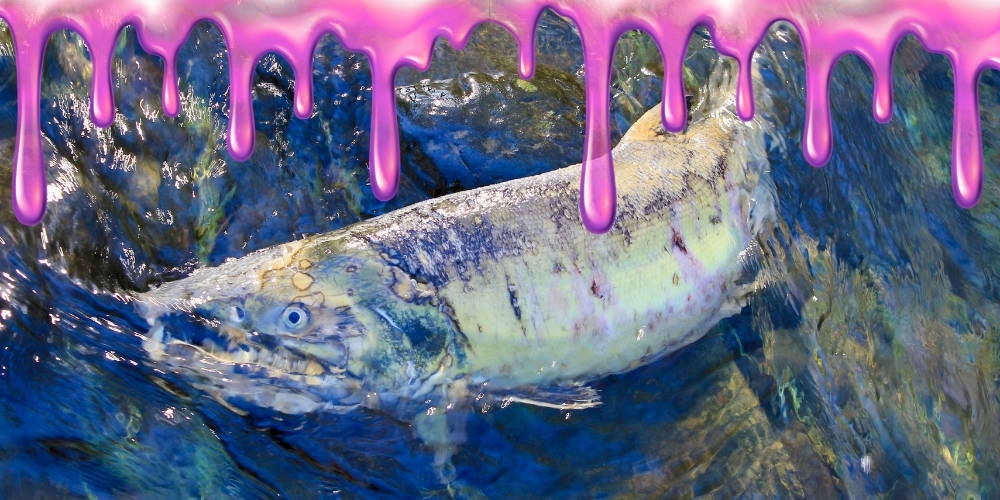
The salmon swim again.
One hundred years,
One hundred
___________generations
Yet still they remember the way.
Karuk stories end
with this phrase
“Shine early, Spring Salmon, hurry upriver.
My back is straight.”
April is called iruravahívkuusra.
Spring Salmon month.
_______________________________________________The invaders are at the gates.
One hundred years ago
the Klamath dams were built
to be permanent.
But it was not the dams that
stood the test of time.
How long can this year go on?
I ask the salmon,
looking at the
destruction
____________invasion
_______________________conflagration
around the planet.
One year, she replies mildly.
Then it’s done.