

How to Spring Clean Your TBR

It’s no secret that good reading practice makes for better writing craft. A diverse and thoughtful book list challenges us to grow and invites learning from a variety of voices and perspectives. But honestly, when was the last time you took a good look at the monstrosity that is your ever-growing TBR? If you audited your last year of reading, what would you see beyond the number of books and pages?

It might only be spring in the northern hemisphere, but everyone’s booklists could do with a little refresh. Here’s how to do it. 

1. Quit the cult of volume

In a world that’s always telling us to do more with less and less time, reading becomes another part of the daily grind, rather than something to linger and marvel over. Each January, our online tracking tools reset and prompt us to choose a new reading goal, to determine the volume of books we pledge to get through this year.

While I find that a numerical goal is helpful when it comes to pacing and encouraging a regular reading habit, it hasn’t translated into my reaching for diverse, challenging, or meaningful books. It’s done the opposite. Frankly, I’m unlikely to try and tackle Paradise Lost, One Hundred Years of Solitude, or A Little Life when I’m staring down the barrel of my ill-advised promise to read 99 other books before New Year’s Eve. Nope, I’ll reach for what sits neatly in my comfort zone.

This past winter, I missed my numeric goal. As the deadline drew closer, I had zero desire to speed read my way through another five books. Instead, I lazily worked through Sally Rooney’s Intermezzo over the winter holidays, and found it was a relief to finally slow down. So, this year, I set a very different challenge for myself: to read fewer books, and to quit the cult of volume.

Now, I’m not saying we need to throw numbers to the wind. The structure of due dates and timelines are something many of us need. I’m also not saying you should eliminate comfort reads from your TBR. But by shifting your focus from how much to who and what you read, you and your writing are much more likely to benefit.

2. Mind the gaps

However you choose to log your reading—be it an online tool, spreadsheet, or real-life notebook—sit down and take a good look at your reading history and the books living in your TBR. There isn’t really a wrong or right way to do this assessment. You can make charts, diagrams, thought clouds, or just eyeball it. What matters is being open to asking yourself what is, and more importantly, what isn’t on these lists. 

The process doesn’t need to be long. Really, you only need to come up with a single gap you’d like to work on. And trust me, there will be plenty to choose from.

Here are some questions to help guide your reading audit:

  • Do I consume mostly fiction, nonfiction, or poetry?
  • What genres are missing from my lists? Are there any I tend to avoid?
  • Whose voices are underrepresented in the books I choose? What are the identities of the authors on my lists?
  • What formats do I engage with? (e.g. print, audio, comic)
  • Are there any trends in the narratives or themes of the books?
  • Were any of the books originally written in a different language?

Now, armed with this knowledge and the sweet freedom of numerical goals in your rearview—it’s time to set specific and attainable goals (just like your high school teachers always wanted).

3. Make it personal

By this, I mean, set goals and adjust your reading life in ways that make sense for you. The point of spring cleaning is to open the windows, let fresh air in, and purge what you don’t need. It does not involve putting all the things you love and use every day on the curb for pickup. 

If you find your joy in a certain type of book, please maintain that joy. Find a balance, specific to you, between books that challenge, comfort, distract, and teach. Focus on growth, diversity and learning from different perspectives. 

This could look like adding emotionally difficult books thoughtfully between your comfort reading, actively seeking out the voices of authors historically excluded from publishing, or simply reading outside your usual genre.

Here are some potential ideas to inspire you:

  • Fiction in a genre you actively avoid
  • Audiobooks of books you’ve already read
  • Books in translation
  • Queer poetry
  • Fantasy written by women
  • Essay collections
  • Science fiction by Black authors
  • Books about the craft of writing
  • Writing about grief
  • Graphic novels
  • Plays

Once you decide on your reading goal, my suggestion is to find one or two books that fit your needs. Start small and give yourself time.

4. The purge

Now, if you’re like me, over the year your TBR begins to take on a life of its own, growing and growing until it blocks out the sun. At this magnitude, it stops being helpful, reflecting my fleeting 2 a.m. obsessions more than the books I actually plan on reading (picture me adding every book by Dickens, knowing full well that I’ll never read every book by Dickens).

So, in case you needed it, this is permission to purge your TBR. Clear out the cobwebs. Make space for growth and exploration in your reading life. Keep what excites, comforts, challenges, and inspires you. And let yourself slow down a little to linger over the experience.

Check out these thirteen writing prompts to inspire creativity, and subscribe to our newsletter to be the first to know about new writing challenges!

The Weight of What Isn’t Said: An Interview With Nafisa A. Iqbal

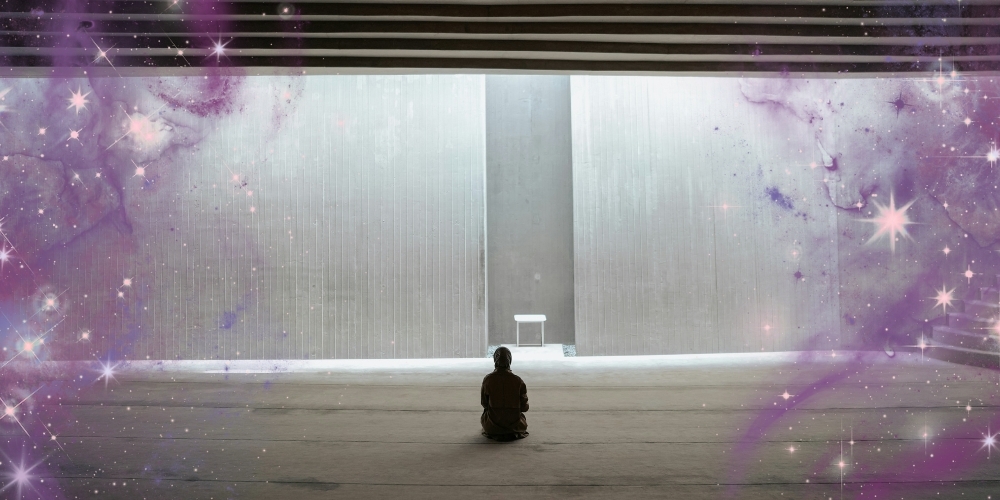
Nafisa A. Iqbal’s winning poem, “Louis Kahn’s Ghost: National Assembly Building, Dhaka, Bangladesh,” is a dimensional piece that examines the unresolved questions of democracy and power. There is so much meaning between the spaces in this work, and we invite you to sit with it, and then read our conversation with Nafisa.

Rebecca Paredes: You submitted this piece for our Checks and Balances challenge, which invited writers to explore the tilting dynamics of power and systems. How did that prompt inform this poem?

Nafisa A. Iqbal: This prompt felt complementary to my work as someone whose writing frequently addresses (im)balances of power and personal and political apparatuses of oppression. As a Bangladeshi writer, the July Revolution of 2024 that my country lived through is still fresh in my mind since February the month this challenge was held—marked Bangladesh’s first national election since the toppling of the fascist regime. I wanted to approach these themes obliquely through the lens of architecture, an art form I’ve grown intimate with through my life partner who is an architect.

RP: This poem is grounded in a distinct historical moment, but so clearly interacts with notions of accountability and absolution that remain relevant today. Why Louis Kahn, and why this building?

NAI: The National Assembly Building, or the Jatiyo Shongshod Bhobon, as it is known in Bengali, is a monumental piece of architecture known to every Bangladeshi, operating for us as an emblem of democracy. The story of its construction is profound. Louis Kahn was initially commissioned to design this project in 1962 by the Pakistani government, who, at the time, ruled Bangladesh following the Partition of the Indian subcontinent by the British. While the project was being built, Bangladesh won its independence from Pakistan and became its own sovereign state. This shifted the significance of this project from a legislative complex in a region that was politically marginalized in Pakistan to becoming the symbolic heart of the infant nation-state of Bangladesh.

There is also the fact that Kahn died in 1974, eight years before the project was completed. To me, there is something haunting about this. This is a building designed before its country existed and completed after its architect was no more. In my poem, I wanted to draw the connection between the unfinished business of a major project and the unresolved questions of democracy that still haunt Bangladesh today.

RP: One of the reasons this poem stood out to me is that it turns the gaze on the artist—how what we support, and what we participate in, can also perpetuate larger systems of power. The em dashes, and the white space they create, contributed to that gaze. How do you view the em dashes functioning in this piece?

NAI: Kahn often spoke of light as a fundamental design element of this project. The building uses the strategic placement of voided shapes to bring in natural light. Monumental geometrical openings become apertures that choreograph the experience of this space. I wanted the em dashes to function in a similar way: as apertures in the body of the text, with the white space as light. Meaning is meant to accumulate in these pauses. I wanted the reader to feel the weight of what isn’t said. The fragmentation caused by the em dashes also mirrors the jagged history of the space I am dealing with, one that cannot be told in smooth or straightforward syntax.

RP: Is there anything else you’d like to share about this piece, or anything you’re working
on now?

NAI: Currently, I am working on a deeply personal project: translating the poems of my late grandmother, Rahila Islam, a poet who lived through British colonial rule, the 1952 Language Movement, and the 1971 Bangladesh Liberation War. Although she published two poetry collections in her lifetime and published prolifically in well-known publications in Bangladesh, her work remains largely unknown to a wider audience despite engaging adeptly with these major historic moments. I am drawing on my grandmother’s poems, our family archives, as well as oral histories held by the women in my family to challenge the erasure of her work, and in a broader sense, that of women’s voices in Bangladeshi literary history.

Lastly, I would encourage anyone reading this poem to look up a photo of Kahn’s project. It truly is a masterpiece of Brutalist architecture! Readers can find me and follow my work on Instagram: @the_monafisa.

Redacted Shortlist

From fiction exploring the erasures of adulthood to poems about being silenced, we were floored by the nominations to our Redacted writing challenge in March. Our shortlist recognizes the pieces that lingered in our brains long after the submission window closed. Keep eye out for our finalists next week!

Fiction:

And I Ain’t Asked Much Since” by Ink Cassell

Poetry:

The New Art, Fire” by Tyler Barton

The Song That Didn’t Sell” by Desiree Cooper

Natural Oath of Agnostica” by Carmen Fought

Bill of Trans Rights” by Griffin Rockwell

Subscribe to our newsletter to be the first to know about our next writing challenge.

Redacted Finalists

Our Redacted challenge invited writers to submit pieces about transparency, accountability, and cover-ups. In addition to our standard call for submissions, we encouraged erasure work for this theme, and—wow. Y’all delivered. We were floored by the inventive and arresting ways that writers submitted blackout, crossout, and other forms of erasure poetry and prose. Please join us in celebrating these winners, and keep an eye out for their impressive work on our website at the end of April!

First place

“Slumber party” by Zoe Korte

Second place

“Body Count” by Hero Jason Uchebenu

Third place

“[If You Have Received This Notice]” by Julia Ross

These winning pieces will publish at the end of April. Can’t wait? Check out the winners from previous challenges here. To be the first to know about our next challenge, sign up for our newsletter.

Iterations of Erasure: An Interview With Zoe Korte

In “Slumber party,” our Redacted challenge finalist, Zoe Korte uses the burning haibun poetic form to navigate sexual trauma and the loss of autonomy. It was an honor to speak with Zoe about their poem’s structure, language, and craft. Read the piece, and then check out our conversation.

Rebecca Paredes: You submitted this piece for our Redacted challenge, which invited writers to explore the after-effects of what gets hidden. How did that prompt inform this poem?

Zoe Korte: As a kid experiencing child-on-child sexual abuse (COCSA), I had no vocabulary to name my trauma. If that wasn’t taboo enough, I was entrenched in purity culture, the adults around me sheltered and deprived me of self-knowledge. Victims of abuse are encouraged to keep silent and avoid conflict, and receive backlash for using their voices. My words, my autonomy, my understanding of myself was actively being erased. I have been working with erasure poetry for about a decade and recently started experimenting with the burning haibun form created by torrin a. greathouse, who has also used this method to explicate themes of sexual trauma.

RP: We universally applauded this poem’s layers—the way the opening poem is so impactful, yet disorienting, not unlike the speaker at the slumber party, followed by the self-erasure to reveal the deeper truths underneath. Can you talk about your approach to the three levels of self-erasure?

ZK: Each iteration of erasure represents repeated trauma, as the voice of the poem becomes increasingly disjointed and associative. The speaker is reduced to simple begging, insisting in new ways while being ignored, and gradually gives up on being heard at all. Similarly, the form mimics how memory degrades over time, but as it decomposes, it can fertilize new insights. I tend to think of erasure poetry not as burying meaning, but unearthing or excavating it, almost in a surgical sense as the writing process requires an almost meditative state of focus and discernment.

RP: The phrase “small but dense” appears multiple times in the beginning, and it’s such an evocative phrase—of childhood, of bodies, of an innocence that must now carry weight. What does this phrase mean for you in the poem?

ZK: With most of my work, I often don’t realize a poem or volume has accumulated its own lexicon except in retrospect, when my obsessions and thought patterns emerge across pieces. However, in the run-on word-vomit section of my burning haibuns, I do consciously double back and recycle phrases to unfold multiple dimensions and reach a semi-satisfying conclusion. Revelation and realization alter the past as we remember in new ways and experience multiple truths. I have often found that growth feels like spiraling back to the same ideas but with added insight. This particular phrase is an echo of a recurring motif of mine. Thinking of myself as discrete, compact, or finite has always helped ground me, like an antidote to dissociation. Acknowledging the limits of my body, memory, and perception, especially in regards to my child self, has led me to feel less overwhelmed and consumed by trauma and shame.

RP: Is there anything else you’d like to share about this piece, or anything you’re working on now?

ZK: I am polishing up a full-length collection of erasures largely composed during the early days of the pandemic that I hope to publish in the near future! I also encourage everyone to look into signs of COCSA, whether you suspect you have experienced this type of abuse or would like to be more aware of how to prevent it. RAINN has some great resources.

How to Cross-Pollinate Your Writing

My creativity has always arrived like the seasons—often unpredictable, but fortunately, inevitable. Rather than fight myself when the words come slowly, I tend to embrace the lull, taking that time to rest and reset. But after a long, cold Canadian winter, my writing needs a little push to emerge from its hibernation.

The creative process is different for everyone, but it’s never going to be perfectly linear or constant, even if you stick to a habitual practice. Maybe the issue will be that you can’t find the words at all, or maybe the words are there but refusing to blossom into something deeper. When we restrict ourselves to the confines of our writing or to our chosen genre, we can easily begin to feel stuck, and those natural lulls in the creative process begin to feel like the enemy. 

So, what can we do to keep our creative selves nourished? How do we cultivate the words when the ground is frozen? How can we help our writing bloom?

In nature, cross-pollination has a lot of advantages over self-pollination, namely adaptation and diversity. Cross-pollinating your writing has a similar effect—and by using it to enrich our creative lives, we can more easily find inspiration and generate ideas. Here are some ways to get that much-needed pollen.

1. Become a fierce art appreciator

I’m of the belief that art creators must also be fierce art appreciators. Not only is this an act of solidarity during an era of endless funding cuts, but it’s also a highly effective way to cultivate creative energy. 

Take advantage of what’s accessible to you, both financially and geographically. And make sure you give attention to small and emerging artists. Who knows? Maybe one day you’ll get to gloat that you knew them before they were famous. Live in a big city? Do us all a favour and prove Timothée Chalamet wrong. Go to the opera! Go to the ballet! 

By no means do you need to live in some big city to enjoy art. Even small and rural towns have local galleries, public art, theatre organizations, bands, and festivals. And guess what? They are usually more affordable and have shorter lines for the bathroom.

Recommendations from the Glossy Planet team:

Try ekphrastic poetry. It gets me out of my head and forces me to use my senses. If you find yourself overexplaining in your poems, this is a great way to practice relying on imagery. For inspiration, one of my favourite artists is Matthew Wong, and I recently fell in love with the plein air paintings of Rob Pointon (@robpointonartist). –Hayley Clin

Outside of literature for inspiration, I draw from films such as Pan’s Labyrinth, Mulholland Drive, Amadeus, and Anonymous. I also enjoy listening to classical, ambient, or avant-garde music while I write. There’s something about instrumental music that sets my mind on the right path in the writing process. –Erick Mancilla

I’m a big modern art fan because you bring so much of your own experience to interpreting an exhibit. I love to walk through the quiet of a gallery and see what comes to mind. The Geffen Contemporary at MOCA in Los Angeles always has interesting pieces, I loved Olafur Eliasson’s exhibit there in 2024 (find more of his work at www.olafureliasson.net). –Ashley Huyge

When I’m in a writing rut, I really lean on books, movies, and TV shows to reignite my spark. I was super burnt out recently and couldn’t resonate with anything I was trying to read — but watching Project Hail Mary in theaters reminded me what’s possible when we lean into our passions and craft. –Rebecca Paredes

2. Do something that isn’t writing

Hear me out. Sometimes the best thing for your writing project is not writing. It probably comes as a surprise to no one that living life is a key part of the creative process. Whether it’s a lifelong craft, fleeting hyperfocus, or casual hobby, these practices help us reconnect with the world, rest our writer’s brain, and nourish our creative selves beyond the dreaded manuscript.

Recommendations from the Glossy Planet team:

I got into sourdough recently. I dabble in dough. When you sling sourdough, you tend to interact with other people more regularly—gifting it, swapping recipes and tips. Few things are as lovely as sharing something you baked with another person you care about. It’s a good reminder that, even though writing is solitary, the rest of our time away from the desk doesn’t have to be. –Rebecca Paredes

I’ve recently gotten into mixed media animations. It’s really a way of doing love letters for my long-distance partner, and I’m enjoying the slow, very involved process. I grab all my arts and crafts materials and go crazy playing with analogue animation techniques, funky colour splashes and doodles which move themselves across the frames. I absolutely adore this part; it’s like hundreds of tiny sketches that can be as messy and silly as I like. The magic of this art form is that once I scan the pages, edit the video, and press play—they are perfect and fun and compelling! –Caitlyn Stone

Try making playlists for your fictional characters. It helps you go beyond external description. –K Roberts

I’ve been really inspired by video games recently. Specifically, I like to use the side quests in games to spark new ideas. Right now, I’m playing Split Fiction with my sister, and it’s been inspiring some new short story concepts for me. –Alicia Caples

3. Move your body

So much of writing is a cerebral and solitary practice that it’s easy to lose sight of the connection between the brain and body. But physical movement can help reconnect us to our senses, calm the mind, and break cycles of thought holding us back. Also, I hear exercise is highly recommended by doctors and scientists. Movement doesn’t need to be hard or complicated, either. It can be a walk around the block, a good stretch, or a solo dance performance alone in your living room—whatever is accessible and beneficial for you.

Recommendations from the Glossy Planet team:

Jiu jitsu is a big creative outlet for me. It requires me to get out of my own head, stay in the moment, and show up regularly—all things that translate to writing. There’s a long history of writers who are involved in martial arts, and I think part of the reason—aside from doing something that is a complete counterpoint to sitting at a desk and writing—is that it’s an endless source of creative inspiration, from the storylines that go into fight nights to the people you meet in gyms. Also, walking! That Thoreau guy really was on to something. I live in an area with lots of trees, and it’s so lovely to go on a long walk with my dogs in the sunshine. –Rebecca Paredes

I bounce a rubber ball. Against the floor, the wall, the ceiling, and then back to me. I do this several times until it clicks in my head where to begin writing and where to go from there. It’s almost like an engine being turned on. The rhythm that comes from the motion of the bouncing ball gets me going. –Erick Mancilla

4. Get out of your genre bubble

Reading books outside your niche can help you find new approaches to writing and spark inspiration. Each genre has its own conventions and techniques for dialogue, tone, structure, and pace. By reading more widely, you’ll expand the devices at your disposal. When you do get stuck or bogged down in your writing, you’ll be glad to have multiple tools to dig yourself out.

Recommendations from the Glossy Planet team:

Get inspiration from old children’s stories. Everybody knows about Winnie the Pooh and Beatrix Potter, but have you ever read them? With the right tone of voice, The Tale of Peter Rabbit is a straight-up horror story. –Jacob Engelsman

Write beyond your usual genre. One of the best poems I’ve written thus far came from a scene I wrote for my novel. I’d also recommend trying shorter-form writing in general. If you’re working on a long manuscript but feeling stuck, finishing a piece of flash prose or poetry can give you that much needed sense of accomplishment and momentum. Get that dopamine! –Hayley Clin

Want to be the first to know about our upcoming writing challenges? Subscribe to our newsletter. We release a new theme every month!

Register for Urgent Writing: A Generative Flash Fiction Workshop

This event is closed for registration.

How do you write in response to the world in real time? Join writer Jaclyn Desforges for a 90-minute virtual workshop on flash fiction and urgency: how we tap into fear, noise, dread, anger, and absurdity, and turn all of that pressure into prose.

This event is part craft conversation, part generative writing session, part Q&A. Jaclyn will discuss writing flash fiction in response to today’s climate — how we turn politics, headlines, and private fears into narratives — and guide participants through a generative writing session built from what won’t leave us alone. You’ll have space to write, and, if you want, share your work in a supportive space. There will also be a dedicated Q&A to ask Jaclyn questions about writing and publishing today. 

You’ll leave with a draft, or the beginning of one, and a clearer sense of how to write inside this moment. This workshop is open to all writers, regardless of experience or publication history. 

Registration costs $20. The event Zoom link will be sent in your confirmation email. A recording of the event will be distributed to all registrants, so we encourage you to sign up even if you’re unable to attend the night of the event.

Date: Thursday, August 13, 2026
Time: 7 PM ET / 4 PM PT
Location: Zoom

See you there!

Who we are

Jaclyn Desforges (she/her) is the queer and neurodivergent author of a short story collection, Weird Babies (The Porcupine’s Quill, 2026), which Quill & Quire called “refreshing, unpredictable, and utterly distinctive.” She’s also the author of poetry collection, Danger Flower (Anstruther Books, 2021), and a picture book, Why Are You So Quiet? (Annick Press, 2020). She’s currently writing her first novel, Eyelash Person, with the generous support of the Canada Council for the Arts. A Bread Loaf alumna and RBC/PEN Canada New Voices Award Winner, Jaclyn’s writing has appeared in CRAFT Literary, The Fiddlehead, Room, and other magazines across North America. Her work has been nominated for Best of the Net, Best American Science Fiction & Fantasy, as well as Best American Short Stories, and she was a finalist for the 2023 CBC Poetry Prize. Jaclyn’s poetry collection travelled to the moon in 2025 as part of the New York Times-featured Lunar Codex Project. She teaches creative writing at Wilfrid Laurier University and lives in Hamilton, Ontario.

Rebecca Paredes (she/her) is the editor-in-chief of Glossy Planet and your facilitator for this event. She is a writer from Southern California by way of Lake Elsinore, where the IHOP is located next to the graveyard. Her fiction, poetry, and essays have appeared in Epiphany Magazine, Barren Magazine, Hunger Mountain Review, and other publications. She holds an MA in Creative Writing and is currently working on a novel inspired by her hometown and Mexican magic.

Silent Spring Shortlist

Our Silent Spring writing challenge asked for work that explored what it’s like to live in the climate apocalypse, and we were floored by the responses. Our shortlist celebrates the pieces that made big leaps, moved us with structure and form, and took the theme in unexpected directions. We will announce our finalists next week, and publish our winners at the end of the month!

“Flowers Are Evolving to Have Less Sex” by Chelsea Fanning

“I Am Tired of Being Laura” by Laura Passin

Inheritance” by Matthew Bartel

“in the end there will be” by Olivia Mulcahy

rootstock” by Elle Eghigian

The Tenth Spring” by Hayley Grace

Subscribe to our newsletter to be the first to know about next month’s writing challenge!

Silent Spring Finalists

In honor of Earth Month, our Silent Spring writing challenge asked writers to explore living in the climate apocalypse: climate denial, survival, and adaptation. We’re thrilled to share the titles and authors of our finalists, from a flash fiction story about love and sacrifice to a poem that weaves form and substance into a musical, heartbreaking piece. Join us in celebrating our winners, and check back at the end of May to read their work!

First place

“Caddis” by Danielle Janess

Second place

“Shine Early, Spring Salmon” by Emily Woodworth

Third place

“Countdown” by Shea West

We are so excited to publish these pieces at the end of May. In the meantime, you can check out the winners from previous challenges. Plus, sign up for our newsletter to stay in the know about future challenges.

How to Write Hard Things

The act of writing is inherently vulnerable, but this becomes doubly true as we dive into the hard stuff—those painful, messy, and heavy feelings and experiences. These things can be difficult to write about for many reasons. It could be that the subject is deeply personal or private, exploring something that carries immense emotional weight for us. It can be hard because we want, so deeply, to write a piece that does justice to an important topic like grief, shame, trauma, and oppression. 

At Glossy Planet, we look for work that responds to what is going on in the world and reflects on topics of incredible weight and significance. Since October, our challenges have asked you to submit pieces that speak to structural violence, climate collapse, surveillance states, government oppression, political corruption, disinformation, capitalism, and the cycle of war. We very much ask you to write the hard things.

Writing reflects the human experience, and that includes heavy and painful subjects. But how do we cope when those hard things overwhelm or immobilize us? What techniques can help us to navigate difficult themes? 

1. Begin with distance

As a writing technique, narrative closeness creates a sense of immediacy and evokes intense empathy in the reader, but it can also be an emotionally tough place to start from as a writer. Distance is a great tool that can be easily applied in a few ways:

  • Create space in time by using future or past tense rather than the present tense. When we write in the present, we psychologically situate ourselves in that moment—instead, place yourself in the position of looking forward or backward.
  • Create space using point of view: write in the third- or second-person rather than first person. Let an imaginary person experience the hard thing.
  • Create space between yourself and the interior worlds, experiences, and knowledge of the narrator or characters in your piece. Write like an observer or journalist, keep things highly factual and focus on external details and images. This is sometimes referred to as “psychic distance.”

Writing with more distance turns down emotional intensity, which helps if you get stuck or overwhelmed with difficult themes. Once you’ve got a first draft of that scene, image, poem, or story, you can go back and make changes to verb tense, point of view, and level of detail. What’s important is that the bones are there for you to build on now. 

2. Change perspective entirely

This approach isn’t just about creating temporary distance to help you get through your first draft. Instead, this technique defines the piece because you’re writing from an entirely different point of view.

The key is that the perspective should be unfamiliar, absent from the story or poem, or entirely imaginary. This technique is formally known as prosopopoeia, and Sylvia Plath’s poem “Mirror” is a great example of it in action!

Here are some ideas to get you started:

  • Write a poem from the perspective of a family pet.
  • Write a scene from the perspective of an abstract concept, such as Sin or Death (John Milton does this in Paradise Lost).
  • Write from the perspective of an inanimate object in your home.

3. Use omission and avoidance

Although the self-help industry has led us to believe otherwise, sometimes a little avoidance is exactly what you need. If writing about certain topics feels overwhelming or traumatizing, but you still want to engage with the themes, try a more indirect approach. Omitting something can be a highly effective way to write about it.

There’s an assumption that a piece about a difficult subject needs to be visceral or highly detailed to truly do it justice. But it can be just as powerful to circle closer and closer to that difficult thing without ever fully laying it bare for the reader. Hard things exist in the matrix of daily life; even amongst the destruction of war are mundane acts of living. 

These familiar details hold more meaning than we often give them credit for. For example, in Czeslaw Milosz’s “A Song on the End of World”, the reader is given zero details about the destruction at the center of the poem. They’re left to imagine it by themselves. The effect is haunting and holds huge emotional weight without ever detailing the violence. 

4. Don a shell

When you’re writing hard things, it can be helpful to have a structure to organize your narrative or poem within. I’d recommend trying hermit-crab poems, essays, or stories which involve using a non-literary shell to house your writing. 

This technique provides you with a template that supports you as you write: many structural decisions will come pre-defined, and you can begin with a scaffold instead of that daunting blank page.

To fully understand the possibility and wonder of the hermit-crab, I’m of the opinion that examples are key:

“Are You Allowed to Criticize Simone Biles?: A Decision Tree” by Carlos Greaves

“an instagram frittata” by Samantha Irby

“We Regret to Inform You” by Brenda Miller

A Lexicon of Palestinian Boyhood” by L.F. Khouri

Here are some shells to get you started:

  • an email
  • a spreadsheet
  • a recipe
  • a contract
  • a manual
  • an obituary
  • a set of instructions
  • a Dungeons & Dragons character sheet
  • a grocery list
  • a text conversation
  • a dictionary definition
  • a medical form

Check out part two of this series next month for more ideas on how to write hard things!

Be the first to know about our next writing challenge theme by signing up for our newsletter, and read all of our past winners.

BAD MEDICINE 💊 Our call for submissions closes Sept. 15!

X