Redacted Finalists

Our Redacted challenge invited writers to submit pieces about transparency, accountability, and cover-ups. In addition to our standard call for submissions, we encouraged erasure work for this theme, and—wow. Y’all delivered. We were floored by the inventive and arresting ways that writers submitted blackout, crossout, and other forms of erasure poetry and prose. Please join us in celebrating these winners, and keep an eye out for their impressive work on our website at the end of April!

First place

“Slumber party” by Zoe Korte

Second place

“Body Count” by Hero Jason Uchebenu

Third place

“[If You Have Received This Notice]” by Julia Ross

These winning pieces will publish at the end of April. Can’t wait? Check out the winners from previous challenges here. To be the first to know about our next challenge, sign up for our newsletter.

The Weight of What Isn’t Said: An Interview With Nafisa A. Iqbal

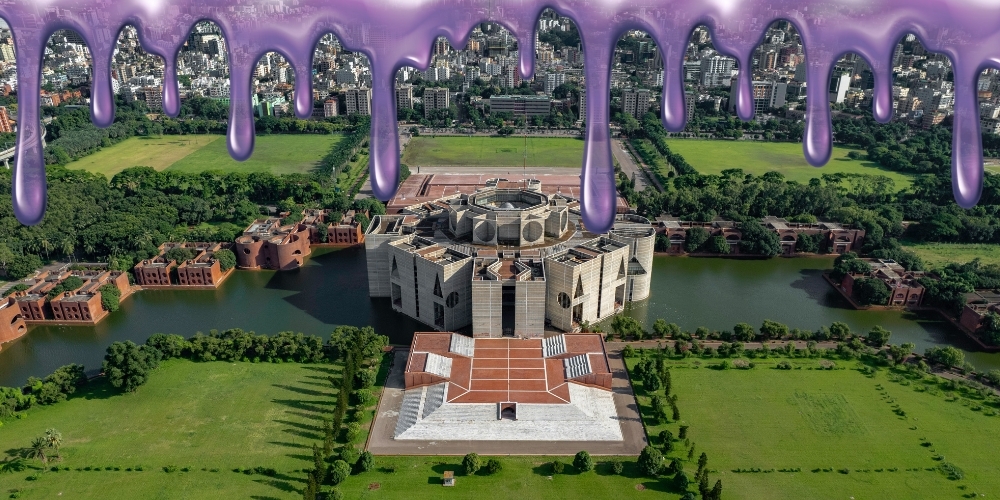
Nafisa A. Iqbal’s winning poem, “Louis Kahn’s Ghost: National Assembly Building, Dhaka, Bangladesh,” is a dimensional piece that examines the unresolved questions of democracy and power. There is so much meaning between the spaces in this work, and we invite you to sit with it, and then read our conversation with Nafisa.

Rebecca Paredes: You submitted this piece for our Checks and Balances challenge, which invited writers to explore the tilting dynamics of power and systems. How did that prompt inform this poem?

Nafisa A. Iqbal: This prompt felt complementary to my work as someone whose writing frequently addresses (im)balances of power and personal and political apparatuses of oppression. As a Bangladeshi writer, the July Revolution of 2024 that my country lived through is still fresh in my mind since February the month this challenge was held—marked Bangladesh’s first national election since the toppling of the fascist regime. I wanted to approach these themes obliquely through the lens of architecture, an art form I’ve grown intimate with through my life partner who is an architect.

RP: This poem is grounded in a distinct historical moment, but so clearly interacts with notions of accountability and absolution that remain relevant today. Why Louis Kahn, and why this building?

NAI: The National Assembly Building, or the Jatiyo Shongshod Bhobon, as it is known in Bengali, is a monumental piece of architecture known to every Bangladeshi, operating for us as an emblem of democracy. The story of its construction is profound. Louis Kahn was initially commissioned to design this project in 1962 by the Pakistani government, who, at the time, ruled Bangladesh following the Partition of the Indian subcontinent by the British. While the project was being built, Bangladesh won its independence from Pakistan and became its own sovereign state. This shifted the significance of this project from a legislative complex in a region that was politically marginalized in Pakistan to becoming the symbolic heart of the infant nation-state of Bangladesh.

There is also the fact that Kahn died in 1974, eight years before the project was completed. To me, there is something haunting about this. This is a building designed before its country existed and completed after its architect was no more. In my poem, I wanted to draw the connection between the unfinished business of a major project and the unresolved questions of democracy that still haunt Bangladesh today.

RP: One of the reasons this poem stood out to me is that it turns the gaze on the artist—how what we support, and what we participate in, can also perpetuate larger systems of power. The em dashes, and the white space they create, contributed to that gaze. How do you view the em dashes functioning in this piece?

NAI: Kahn often spoke of light as a fundamental design element of this project. The building uses the strategic placement of voided shapes to bring in natural light. Monumental geometrical openings become apertures that choreograph the experience of this space. I wanted the em dashes to function in a similar way: as apertures in the body of the text, with the white space as light. Meaning is meant to accumulate in these pauses. I wanted the reader to feel the weight of what isn’t said. The fragmentation caused by the em dashes also mirrors the jagged history of the space I am dealing with, one that cannot be told in smooth or straightforward syntax.

RP: Is there anything else you’d like to share about this piece, or anything you’re working
on now?

NAI: Currently, I am working on a deeply personal project: translating the poems of my late grandmother, Rahila Islam, a poet who lived through British colonial rule, the 1952 Language Movement, and the 1971 Bangladesh Liberation War. Although she published two poetry collections in her lifetime and published prolifically in well-known publications in Bangladesh, her work remains largely unknown to a wider audience despite engaging adeptly with these major historic moments. I am drawing on my grandmother’s poems, our family archives, as well as oral histories held by the women in my family to challenge the erasure of her work, and in a broader sense, that of women’s voices in Bangladeshi literary history.

Lastly, I would encourage anyone reading this poem to look up a photo of Kahn’s project. It truly is a masterpiece of Brutalist architecture! Readers can find me and follow my work on Instagram: @the_monafisa.

Louis Kahn’s Ghost: National Assembly Building, Dhaka, Bangladesh

1961, construction began———the Architect drawing a dream———in poured concrete.
A substantial challenge———to give lodging to Democracy———to give form to the State when she
is still forming———coagulating from Partition and Injustice———nebulous, indeterminate. 1971,
the people demanded Revolution———Independence and Liberation, lofty ideals———petrified
Architect granted Absolution by his own demise. 3000 Moons later———completed
posthumously———they say his ghost haunts the Rotunda———whispers
to Members of Parliament———Spirit & Science———Spirit & Science———Spirit & Science——
—conjecturing whether he got it right———the precise Configuration of Arches to Atriums———
Courts to Porticoes———Aperture to Volume. It’s true———he had not envisioned the serene lake
as Moat———the heftas Fortress———the Machine Gun Military Men patrolling its walls———
the questionable use of that teal carpet———let alone, the Dictator———to whom his specter
gesticulates wildly———something about civic duty———having lost his voice.

New Nukes and Old Ghosts

I did not know until my husband’s feet turned blue, until the tumors conquered his lungs and thwarted his breath, until the morphine drip stilled, and the feeding tube dangled empty of nutrition. Only when no warm place remained to rest my face, to seek his aliveness, only then did I learn that Michael’s father died at 58 of the same aggressive lung cancer. 

Only then did I also learn that Dick, his journalist father, witnessed the dawn of the nuclear age. My mother-in-law Katie, the loss of her 36-year-old son merging with her widow’s grief, her white hair neat in its daily braided bun, cast her eyes on her lap, her hands twisting the thinned gold wedding band. She spoke without raising her gaze.

They were handed goggles but no other protection. They were told to turn around. 

My father-in-law, dead long before he would have become my father-in-law, returned from WWII to his wife and two children and his career at the Oregon Journal. In 1946 he was invited to attend Operation Crossroads at Bikini Atoll where journalists witnessed the test atomic bomb explosions aboard the USS Appalachian. Their job: to ease the public’s anxiety about the experiment. 

They told him the only hazard was the possibility of sterility. We had two children. We could take the risk.

Later, Dick also witnessed atomic tests in the Nevada desert, where witnesses were kept at least ten miles from the impact sites, except for a 1953 blast, when journalists were trenched two miles away. 

Their third child came in early 1947, so Katie must have already been pregnant when Dick left for Bikini Atoll the summer of 1946. In 1948 and 1951 she miscarried twice, something that had not happened during all her previous years of childbearing, before giving birth to her fourth and fifth children. Michael, the baby of the family, arrived in 1953.

You see dear, sterility was not the risk after all. 

During the ‘80s, the office of an Oregon senator contacted my mother-in-law as part of an effort to study the cancers of those witnesses and to help them seek compensation. I encouraged her to respond but I don’t believe she followed through. She could not bear the thought of remuneration for her loss. 

My daughter’s health remains sturdy at 46, yet for years I wondered if the radiation of witnesses would also damage a third generation, would harm my child who lost her father when she was ten. For a long while I watched studies, although truly understanding them was beyond my scientific abilities. Eventually my vague fear of genetically transmitted irregularities receded into the place where all my other ghosts swarm quietly. 

This week, my daughter stunned me with the revelation of her fear.

I didn’t expect to live a long life. That’s why I took so many risks when I was younger.

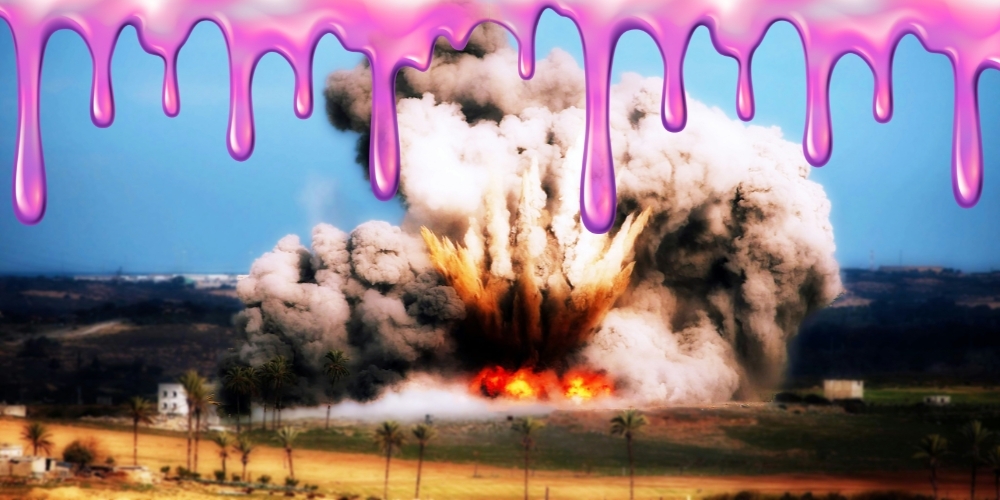
At Bikini Atoll, artists joined the journalists aboard the USS Appalachian. They documented the bomb’s ability to destroy battleships. They painted the unearthly beauty of an atomic explosion, plumes and puff balls and mushroom clouds in brilliant shades of orange, softer pink, dull gray. They painted Bikini Village after the blast and after the resulting tidal wave. They painted grinning journalists with goggles in place waiting for the blast. They painted the admirals and captains. They painted King Juda of Bikini. They painted battleships waiting, battleships destroyed, the placid sunset that followed, their art intended, like the journalists’ coverage, to ease the public’s anxiety.

My anxiety, eased only by time, resurfaces as President Trump tells the Defense Department to recommence the nuclear testing halted in 1992 at the end of the Cold War, and as the last remaining treaty between the United States and Russia limiting nuclear weapons expires. My roused ghosts murmur, NoNoNo. They paint images behind my eyes. 

Shadows of vaporized victims in Hiroshima.

Michael, panicked by morphine hallucinations, gasping for breath. 

The long list of cancers that killed downwinders, those who lived or worked downwind of the test blasts.

My ghosts, rustle, sigh, insist I act. We must awaken all the ghosts who will whisper so loudly that you cannot ignore them. 

Elián González

I wake from a night sweat
to a cold snap, negative twenty
windchill and the shape of your name
bobbing towards the shore
of the bed. My love brings me
coffee and a question:
tell you the terrible things
now, or tell them to you later?
A boat and a life raft,
a boy and an ocean. Yesterday,
another murder in Minnesota.
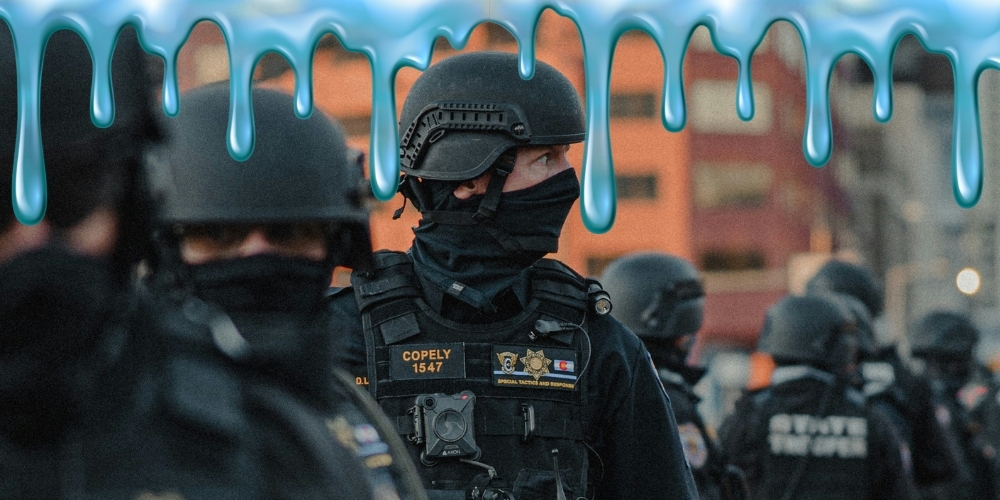
Agents in tactical gear, waging war
against the foreign bodies
in their own hearts they never
loved enough to teach to swim.
We hold each other well
into the morning, saying
the loud things quietly,
and the quiet things out loud.

Checks and Balances Finalists

Our February challenge invited writers to explore the dynamics of power, systems, and change. We opened the challenge with the following quote by Lord Acton: “Power tends to corrupt, and absolute power corrupts absolutely.” Across poetry and prose, these winning pieces explore how we cope with the headlines, the cyclical nature of unchecked power, and the nature of accountability. Congratulations to these writers, and read their published work at the end of March!

First place

“Louis Kahn’s Ghost: National Assembly Building, Dhaka, Bangladesh” by Nafisa A. Iqbal

Second place

“New Nukes and Old Ghosts” by Helena Fagan

Third place

“Elián González” by Julia Alter

These winning pieces will publish at the end of March. Can’t wait? Check out the winners from previous challenges here.

Checks and Balances Shortlist

We had so many incredible pieces submitted for our Checks and Balances challenge. This shortlist celebrates those that made our readers stop in their tracks, and we want to shout out these writers for their work. We’ll announce our finalists next week and publish their work at the end of March. Stay tuned!

Fiction:

Birding” by Seán Flynn

Before Leaving Home, Remember” by Shea West

Poetry:

Hate” by Dominic W. Holt

body count” by Hero Jason Uchebenu

Laundered and Sorted Out” by Linda Perlman Fields

Nonfiction:

Queen Bee” by Heidi Grogan

NOW OPEN: "History Repeating" writing challenge—closes May 15!

X