

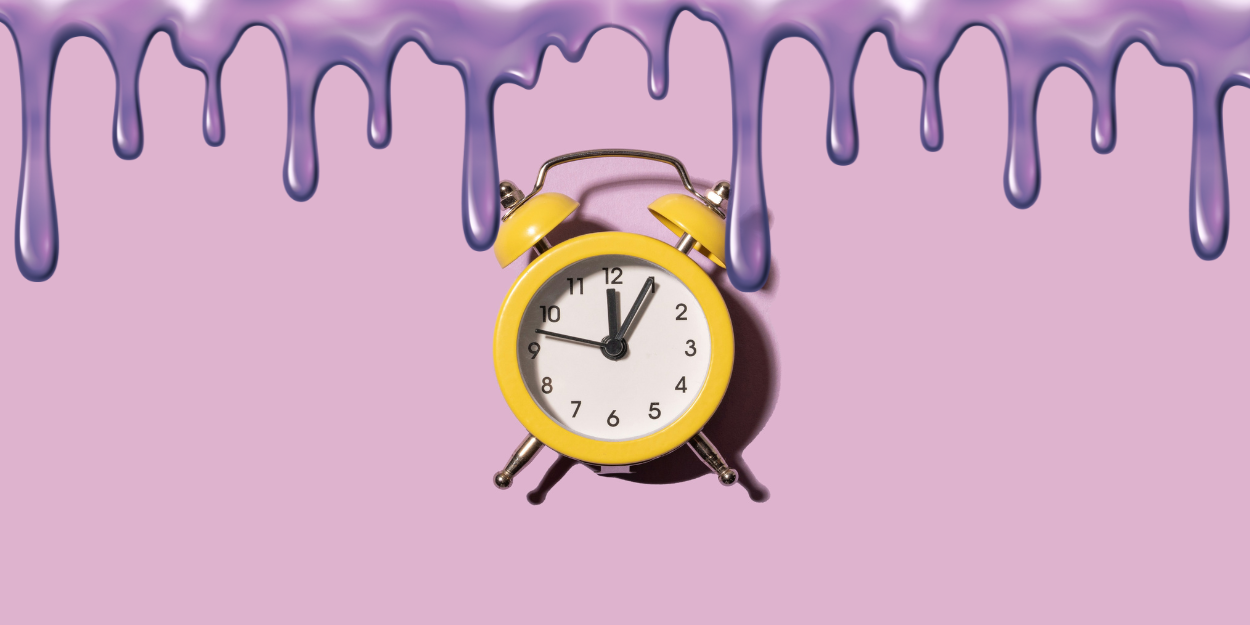
Extra Minutes

The schedule changed on January third. Management quietly adjusted the minutes and taped up a notice beside the time clock—the paper slightly crooked, already curling at the edges. At shift change, people gathered to read it. They studied the margins, the logo at the top, the language that tried to sound neutral.

“They moved it back again,” Paul said, tapping the clock hands with his fingernail. “Three more minutes. Break’s shorter, too.”

Raymond rubbed a circle on the floor with the toe of his boot. “Adds up.”

“By Friday,” Paul said. He waited. “Unpaid.”

Raymond knew they adjusted the clock. Not drastically, never enough to argue over, but often, they nudged the hands back by a minute here, two there, the changes folded into maintenance the way technicians fixed light fixtures or belts. By Friday, the week ran nearly an hour longer. The losses stacked in small increments.

Every day, after Raymond punched in to his shift, he sorted in the distribution center, where boxes and bins cycled by on wide belts. Conveyors carried packages from one end of the floor to the other, then looped back. A closed system. The belts kept their own time. They didn’t wait.

Raymond picked the big boxes. He’d done it long enough that his hands knew a container’s weight before the scanner chirped. When things went well, the work was simple. 

Lift. Scan. Stack. 

Lift. Scan. Stack.

Precise movements, perfected by repetition. He’d gone slight over the years, his joints storing the work. Sometimes he read the labels without meaning to. Addresses stuck with him, useless as facts. 

If something jammed, if a bin tipped, if a label peeled loose, it sent a brief shudder through the line, the metal complaining. Then the work resumed. Sometimes there was a rush, an order flagged urgent, a supervisor hovering close enough to change the air. In those moments, speed mattered. But the belts kept their pace anyway.

In the break room, people talked about the new year. Dry January. Training schedules. A woman from receiving said she’d started waking at four to journal before her shift, like she’d found a way to borrow time. Paul laughed and said he was tracking calories now, like it was a joke.

Raymond listened. Listening cost nothing.

That night, his daughter Lena stood on the counter and circled dates on the new calendar with a red marker.

“Will you fix it?” she asked.

“Fix what?” Raymond asked as he leaned against the sink, rinsing rice. The grains swirled and clicked against the sides of the colander.

“This year,” she said.

Her school had sent home flyers about goals. Raymond folded them carefully and slid them under the sink, where they soaked up spills.

***

On a Thursday, Paul went down in Aisle C.

He wasn’t dead. Just undone. Knees folding. Mouth slack. A complete collapse.

For a long minute, no one moved in to help. It wasn’t clear whether this counted as an emergency.

Raymond hit the stop button and got to Paul first.

“You okay?” he asked.

Paul’s eyes fluttered open. “Skipped lunch. Trying something new.”

The ambulance came. Forms were filled out. The belts paused, then resumed, carrying bins past where Paul had been. The gap closed without anyone commenting.

After work, Raymond drove across town to an empty lot. The engine ticked after he’d parked, the dashboard clock reading 9:17. He should have been home already. 

He thought about the hour management had taken in chunks, how it didn’t feel like theft while it was happening.

Instead of driving home, he walked over to the river.

It wasn’t scenic—runoff thick with silt slurrying behind a closed tire shop. Glass in the dirt. A shopping cart tipped on its side. The current eddied past what it couldn’t take, caught for a moment on what it could, then released.

Raymond stuffed his cold hands in his jacket pockets. He told himself this wasn’t rest. He didn’t tell himself anything else. He lingered until his locked knees ached.

After that, he went every Thursday. Not to recover the hour—there was no getting that back. Sometimes, he brought cookies and ate them slowly, breaking each bite in half. Sometimes he did nothing. The time passed either way.

At work, the pressure tightened. New posters appeared beside the time clock. 

Own your output. 

Use your time wisely. 

A supervisor asked Raymond if he’d considered using his breaks more strategically.

“For what?” Raymond asked.

The supervisor smiled. “For yourself.”

Raymond nodded. He was good at nodding.

In March, Lena brought home another flyer titled “Ways to Develop Grit.

“What’s grit?” she asked.

Raymond thought of the belts, the clock, the way the week stretched without looking different. “It’s staying,” he said.

She watched him wash the dishes. “You stay,” she said, like she was writing it down.

***

Paul came back to the line with a brace on his knee. One afternoon, Raymond watched him clip a pallet with the lift, small cans scattering everywhere. Bright. Loud.

Raymond stooped and gathered them up.

“I don’t know how to stop,” Paul said.

Raymond thought of the clock, the small backward turns. “You don’t have to,” he said. “Not everything at once.”

Later that month, management announced another adjustment. A few more minutes, barely explained. Another correction to the clock. People complained, then went back to work. Complaining took time.

Raymond didn’t say anything. He worked his shift. He clocked out when the screen told him to. He drove home on the same roads.

“You’re late,” Lena would say.

“Yeah. A little.” 

Every Thursday, he still visited the river, where that week followed him, minute by minute, where he stood long enough to feel time.

Relocation

When the woman from Housing knocked, I figured she wanted to sell me pest control. Or solar panels. Or Jesus. I can always tell by the clipboard.

“Ma’am,” she said—ma’am, like I was about to scold someone for leaving a wet towel on the floor—“we’re conducting an occupancy check.”

A man stood behind her, his shirt the color of mop water, the washed-out gray government workers think looks friendly. He held a tablet, my address glowing at the top, my name almost right, off by one letter.

Arguing over spelling never won anyone peace.

I let them in.

They went room to room, tapping walls and photographing outlets as if the house might confess something. The woman trailed a finger along the banister. “You’ve kept it up nicely,” she said. “Mr. Elias will be pleased.”

“Who’s Mr. Elias?”

“The tenant on record.”

After they left, the air smelled like melting plastic. I opened drawers, found my pinking shears, old twist ties, that bent spoon I never threw out. Everything looked fine, I guess, but it felt wrong, like the place had been rebuilt backward, with left where right should be, right where left belonged.

On the fridge, I found a Post-it note with my handwriting. It read: appointment confirmed. The loops were too loose for my cursive, so maybe I’d clicked some online I agree form inadvertently. The government changed files, after all. Maybe it now changed people, too.

That night, I dreamed the house split, quiet as a bone cracking in winter. In the morning, the kitchen reeked of melted plastic again. My chipped blue mug was nowhere to be found. A tin cup sat there instead, stamped Property of the Department of Residence Affairs.

By noon, I heard a key turn in the lock, smooth as butter, and a man rolled a suitcase through the front door. “Miss Carrie?” he asked, which isn’t even close to my name.

“I think you’ve got the wrong house,” I said.

He smiled like a social worker. “I’ve got the lease.” He handed me a laminated card that read 412 Ash Street. My address. The owner was listed as The State. Then he went up the stairs and moved into the guest room.

I spent days on hold with numbers that played a tinny flute tone on repeat. My lawyer—if you can call someone you pay in pizza a lawyer—told me the system showed I’d been relocated six months back. “They’ve got receipts,” he said.

“I never moved.”

“Then you’ll need proof you exist.”

So I sent the department photos of myself in the house—blowing out candles, opening presents under the Christmas tree, petting Minnie, my cat, as she curled on the radiator like a warm loaf. They wrote back: metadata unverifiable; possibly fabricated.

A week later, Minnie vanished. Not a single white hair left on the sofa.

Mr. Elias mostly stayed in his room. I heard him typing, fast, steady, like the house had given him orders. Once I asked, “Why are you here?”

“Everyone needs somewhere to live,” he said.

“This house is mine.”

He smiled, the kind that said you don’t know yet. “Then why does your name keep disappearing?”

Days blurred. Mail arrived for the Current Resident. None for me. My bank account locked itself. At City Hall, the clerk peered over her screen. “You’re listed as temporarily reassigned.”

“I’m right here.”

She glanced at the line of people behind me. “Are you sure?”

Outside, all the front doors on my block had grown small black eyes that blinked red in the dusk.

***

Mr. Elias invited me to dinner. He made rice and beans heavy on the cumin. “No reason we can’t be neighborly,” he said, telling me how he’d lived in the house before redevelopment. “They said the block was unsafe. Moved us out. When they rebuilt, my number came up again.”

Behind him, a pale rectangle marked the wallpaper where my grandmother’s clock had once hung.

“My mother was born in this house,” I said.

He nodded. “Maybe it’s yours in memory, but documents say otherwise.”

After that, I took to the porch. The air turned mean with cold, but it was still free. I watched the streetlights do their little dying act every night—blink, gone, blink, gone. New fences went up, strange cars parked and disappeared, people argued behind closed doors. A drone would pass overhead, dragging its yellow light from yard to yard. Sometimes it paused above me, gave me the once-over like a clerk scanning produce.

After a while, I stopped picking up when Housing called. The woman’s messages always began, We’d like to help you transition.

Transition to where? The moon?

***

The house forgot me. The thermostat wouldn’t listen. The lock refused my key. The floorboards went silent under my feet.

One sleepless night, I opened my laptop and searched real estate listings just to torture myself. There it was. My house. Two bedrooms. Safe neighborhood. Surveillance included. In one photo, a woman who looked just like me stood by the porch light, waving.

I gave up. I packed a coat, a toothbrush, a photograph of my family on a dock in a lake, all of us smiling in the hard sun. Then I walked through each room, memorizing each detail. In the entryway, I leaned into the wainscoting and whispered my name. The wood was pliable. I’d painted that wall a deep teal with my mother when I was twelve. “Color,” she said, “can change your life.”

At the door, Mr. Elias waited, arms crossed tight.

“Will you take care of this house?” I asked.

“I’ll keep it safe,” he said.

I stepped outside and eased the door shut. Snow drifted heavy, steady as static. When I reached the corner, the street was blank. I looked back, but my footprints were already gone.

Register for our summer flash fiction workshop!

X