Letter from the Editor: Our Year in Review

We made it to 2026, and we did it with fire in our words and an eye on the headlines. When Glossy Planet launched late last year, I was deeply curious to see how people would react to a lit mag that responds to the present—and, wow, y’all showed up.

The winners from our first challenge, Monsters We Made, showcased the realities of toxic masculinity in the digital age, the damaging effects of desensitization to violence, and the insidiousness of people in power. The winners from our November challenge, A House Divided, will be published next week, and I’m excited to give you a sneak preview of what these incredible pieces cover:

The fracturing of family histories

The slow realities of erasure

And what happens when we turn the other cheek.

These pieces represent Glossy Planet’s mission: to write in response to the world, not hide from it. It’s an absolute honor to give writers a space to create this type of work. I’ve read in cover letters that our challenges have helped writers break out of a creative slump, and I’ve been told that writing groups are using our challenge copy as writing prompts—all of which makes me feel like we’re doing something right here. Even if you don’t submit your work to us, the very act of creating is worth celebrating, particularly in a time when it would feel so easy to not write and to let the world consume us.

I’m so excited to see what 2026 brings. Our first challenge of the year will launch on January 1 (you can add it to your calendar here), and without giving too much away, it’ll be a direct response to what you hear at the start of a new year. For this challenge, and all the others we release this year, I hope you’ll lean into the deepest part of your writing self and unleash it on the page. 

This isn’t the time to shy away from your truth or obscure what you really want to say with your words—this is the time to let things loose. We will give you a place that will catch those words and read them with care.

Let’s be loud this year. Happy writing.

“Notions of Home”: An Interview With M. Colón-Margolies

“In this poem, the instrument is destroyed, but I know the people who played it, and they’re still able to sing,” shared M. Colón-Margolies, our finalist for “A House Divided.” Read her winning piece, and then enjoy this interview with the writer about her poem “Terms of Sale.”

Rebecca Paredes: You submitted this poem in response to our “A House Divided” call for submissions, which asked writers to explore the shape of shelter and what “home” means today. How did you approach crafting this piece in response to the theme?

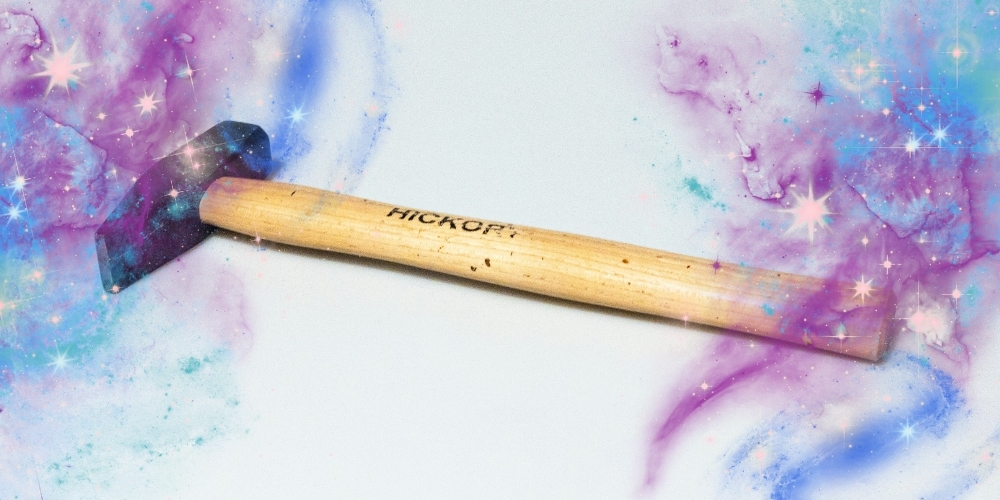
M. Colón-Margolies: I had a story in my head. A relative of mine had to destroy a piano when they moved out of their house and into a smaller, mobility-accessible apartment, and the brutal nature of that event, of taking a sledgehammer to a 100-year-old piano, stuck with me. I mostly write fiction but was having trouble with it at the time. The tidy arrangement of characters and the artificiality of climax and denouement felt off, given the subject matter. In the end, the writing I did came out fragmented, as verse. 

I was also thinking at the time of the Julio Cortazar story, “Casa Tomada” or “House Taken Over.” It’s a short story about a hostile occupation of a home. Slowly, a house is taken, room by room, by a mysterious force. Each new “taking” seals a part of the house and imbues the reader with a feeling of dread. The story hints that there is an essential corruption that brings about this takeover. That there has always been some evil in the home that now grows wild. The poem I wrote is gentler, but perhaps there was something in my mind about the desperate circumstances many people are facing right now, the feeling many have of being pulled under, bit by bit—and also the knowledge that the forces squeezing us have always existed. 

RP: “Terms of Sale” has so many layers—it begins with the realities of aging, and then shifts into an exploration of the ways that packing up a home is not a neutral process in our current political climate. This stanza is such an impactful turn, tonally: “Only later, a few days before the sale, / the day the government changes / the buyers also change their minds. / Tell her parents to get rid of it.” Everything was moving along, and then the parents were left scrambling. Can you talk to me about your thought process at this moment in the poem? 

MCM: The events described in the poem happened this past winter, after the new administration took power. The situation was no one’s fault—my relatives couldn’t manage their house physically anymore and had no room for the piano in their new place. The buyers ended up not wanting the piano, which is understandable and their right. But no one else wanted the piano either, and that image of the violence of physically destroying a cherished musical instrument that brought togetherness and joy was something I couldn’t shake, especially because I was also thinking at the time about everything that was happening in the country—from masked immigration officers snatching people off the street to arts programs being slashed and dismantled. 

RP: The final three lines of this poem stuck with me—they’re simultaneously tragic and resolved. Did you discover this ending in the process of crafting the poem, or was this where it was always headed?

MCM: The ending came to me as I wrote. 

The friend who helped my relative destroy the piano lived through a military dictatorship in his home country. Maybe this had nothing to do with his ability to do the difficult thing, but it felt pertinent to me. The last lines of the poem belong to him and have to do with remembering, which seems to me to be more important than ever when so much is being ripped away. 

The notion of home often has more to do with emotions and memory than with something physically tangible. As I wrote the poem, I thought that music is that way, too. A few years ago, an uncle I loved very much had a stroke. He couldn’t walk or speak, but somehow, he could sing. And not just sing, but sing songs in Spanish, which wasn’t his first language. He learned folk songs while working for the Peace Corps in the 1960s in Chile. I guess the songs he learned there embedded in some deeper folds of his mind so that when motricity and language broke down, music remained. In this poem, the instrument is destroyed, but I know the people who played it, and they’re still able to sing. 

RP: Is there anything else you’d like to share about this poem or what you’re working on now?

MCM: I’m writing a novel about a young woman who disappears in the Atacama Desert in Chile. She is researching lithium mining there, lithium that will be used to power electric cars and cell phone batteries, but that is draining the fragile ecosystem of water. I have been to this desert several times, and when I was there this past year, someone told me that the solar radiation is similar to that on Venus. It’s a very beautiful and sometimes alien place, the driest desert in the world. It’s also the site of contemporary debates about how to mitigate climate change, water scarcity and the race to mine rare minerals, among others.

Anyway, the novel came to me through the prism of this setting, and is inspired, in part, by Graham Greene’s The Quiet American. I love the hallucinatory quality of that novel, and that it is also somehow written in clean, clear prose. It’s a novel about ethical conflicts but also about love, which my book is about, too. That, and betrayals for a supposedly greater good. 

From the Team: What We’re Reading

As we close out 2025, we wanted to share a few of our favorite books of the year, what we’re reading, and what we’re looking forward to reading in 2026. Across our readers and editors, you’ll find that our reading tastes are eclectic—which feels pretty on-brand for Glossy Planet’s editorial team! 

Ashley Huyge

Just finished reading: People Collide by Isle McElroy.

While living overseas in Bulgaria, Eli is on his way to meet his successful and ambitious wife at the school where she teaches when he discovers that he is no longer in his own body. Somehow, he is living inside her body as an unintentional tenant, learning how to move through the world as Elizabeth. Wherever his body is, Elizabeth must be its new owner, prompting Eli to search for his missing wife and body.

What really struck me about this book is how Eli experiences life from his wife’s perspective. How slowly he has to walk with her shortened gait, how much is too much to drink on a night out with friends, how to apply makeup, and just exist in the world as a woman. Reading this book is an exercise in gender, identity, empathy, and belonging.

Jamie Dean Nicholl

Currently reading: Little Women by Louisa May Alcott and In Cold Blood by Truman Capote 

Reading next: Dream Count by Chimamanda Ngozi Adichie and House of Psychotic Women by Kier-la Janisse 

Best read of the year: Things in Nature Merely Grow by Yiyun Li. This memoir finds the author dealing with an unimaginable loss. Her analysis of the grieving process and the aftermath is groundbreaking and touching, and it made me look at death very differently.

Jacob Engelsman

Currently reading: I’ve currently got two things going in my personal reading time. First, a collection of short stories called Tevye the Dairyman, selections from which were turned into the play Fiddler on the Roof. The book, which has become somewhat obscure, was written under the pen name Sholem Aleichem, which you might recognize as a Hebrew or Yiddish pun. He was often referred to as the Jewish Mark Twain (whose name is also a pun but it only makes sense if you know about riverboats), although he only lived in the U.S. for the last 10 years of his life. 

The other is an anthology called Spacefunk!, a collection of Afrofuturist science fiction and poetry edited by Milton J. Davis. I just started this, but I picked it up at the Atlanta Writers Conference, where I had the pleasure of meeting Mr. Davis. I’m going to pick up his Atlanta-themed anthologies the next chance I get.

Rebecca Paredes

Currently reading: Our Share of Night by Mariana Enriquez. If I have any reading resolutions for 2026, it’s to read more translated works, and I’m already loving this one. 

Best read of the year: The Buffalo Hunter Hunter by Stephen Graham Jones. It’s an intricately layered epistolary novel with one of the most original takes on vampirism I’ve seen, nested in a broader investigation of colonialism, indigeneity, and the crimes that haunt us. I was fully invested from the first page with this one, and I recommended it to everyone after reading it.

13 Writing Prompts to Spark Creativity

Do you have a writing goal this year? While the whole “New Year, New Me” vibe is overplayed (to the point that we made January’s theme a counterpoint to it), there is something appealing about starting a new habit at the beginning of the year, when the slate is clean. If you have a goal to maintain a regular writing practice in 2026, here are two things to keep in mind:

  1. You can start to develop a creative habit—or restart one—at any time, whether it’s the beginning of the year, the very end, or somewhere in between, and
  2. Like all habits, maintaining a writing practice means doing it regularly. That might mean daily, every other day, only on weekends, or whatever works for you.

In my quest to develop a creative routine, I started using writing prompts as warm-up exercises to get my brain going, or as ways to explore my characters, settings, and scenes in unexpected ways. Here are a few prompts from the Glossy Planet team—take whatever resonates with you!

Writing prompts for when you don’t know what to write

  • Write a list of objects that are important to you, your character, or a place your character occupies. In case of fire, what are the first things your protagonist would grab?
  • Pick one to five songs in the public domain (at present, that would be anything from the year 1930 and before, in any language from around the world, as long as it’s translated to English). Use the lyrics as inspiration, or draw your own lines from those lyrics. – Erick Mancilla
  • Set a timer for 10 minutes, describe the last time you experienced a sense of awe.
  • For 10 minutes, write about the last time you collapsed into a chair, couch, or bed, too exhausted to move—but don’t use the words “exhausted” or “tired.” 
  • Spend 20 minutes writing a scene that involves an open window, a star-splattered sky, and a person who hears something they shouldn’t.

Writing prompts for structure and tone

  • On a set of index cards, write the key scenes or plot points from a well-known fairy tale, like Little Red Riding Hood or Goldilocks and the Three Bears. Shuffle the cards or deliberately place them in a new order. Then, write the story, following the new structure. How does the tone change? What narrative leaps do you have to make in order to fit the new events? – Alicia Caples
  • Write a piece that uses the phrase “the first time” somewhere in the narrative, whether it’s the opening line or falls somewhere in the middle. The piece should have a beginning, middle, and end, and it should capture a change or shift in a situation or in a relationship with another person. 

Writing prompts for character

  • Interview your protagonist with 20 personal questions. Ask them about their name (do they like it? Who gave them their nickname?), what their home looks like, what they desire, what they believe, who they’d vote for in a major election, how often they talk to their parents, what their friend group looks like…basically, everything you’d want to know about someone you know deeply. Repeat this exercise with your antagonist, side characters, or any other characters you want to understand.
  • Write a scene in which your character instructs someone else how to do something they think they know how to do well. How does your character describe the steps? Are they patient, or are they easily frustrated? Is this lesson important to your character, or are they just going through the motions?
  • Describe the view from a window, as seen by a character who has just received some very great or very bad news. Don’t mention the news in the exercise. Your goal is to give the reader a sense of the character’s internal life, solely by relying on the way they describe their view. What do they notice, and what is the tone of their descriptions?

Writing prompts for language and dialogue

  • Think of a phrase that someone important to your life and/or your story is constantly saying—a habitual line. It should be a line of dialogue that means more than it appears to mean, like “We’ll see” or “I’m doing just fine.” Then, write a piece in which this line is repeated multiple times and establishes the relationship between your character and the other person. How does the meaning of the line change over the course of the piece?
  • Find a photograph of a group of people, whether it’s from a magazine, a website, or your social media. Pick one person in the photo and describe what they see from their perspective, using language that feels particular to them. Then, pick someone else in the photo. How would they describe that same scene or moment from their perspective? What words would they use, and what would they see that someone else would not?
  • Place two characters in a scene. These characters should know each other well. Give one character a secret that they never tell the other person—but by the end of the scene, your reader should be able to intuitively understand the secret from their dialogue.